Showing posts with label ICT. Show all posts

Sunday, October 24, 2021

‘They’re just playing Minecraft.'

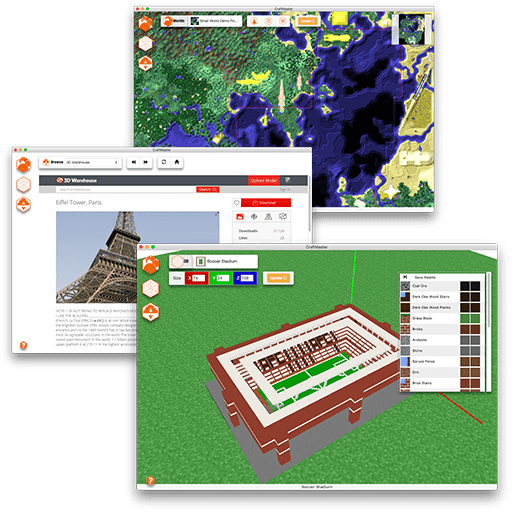
Dozens of students enter the library during both recess and lunch to play Minecraft. They walk in, laptops under their arms, often still chewing a mouthful of food that they hastily shoved in while walking from their class to the library. Their two 30-minute breaks are their time, to eat and use the restroom, sure, but mainly to continue their Minecraft gameplay. My colleagues in the library, and I, have all admitted on various occasions that we have no idea what is so enthralling about the game of Minecraft. The natural colour palette of greens, browns and blues looks pleasant enough, but to the untrained eye the ‘blocky’ gameplay of Minecraft is strangely reminisce of games circa 1990, and aren’t graphics meant to be, like, good, now? This apparent pixelated simplicity is where Minecraft’s real complexity lies and where it allows for unimaginable possibilities.


Minecraft Cube by Albin Olsson available under a CC BY-ND 3.0


Let’s talk about constructivism for a moment. Kuhlthau et al. (2015, p. 15) espouses the significance ‘engaging students in stimulating encounters with information and ideas’ to achieve deep learning. The literal construction embedded in the gameplay of Minecraft aligns with the elements of constructivism including being an active participant, reflection, and high levels of motivation (Kuhlthau et al., 2015, p. 15). There are several elements to consider at this point, firstly, that young people are able to play Minecraft minigames competitively, but Minecraft provides greater satisfaction through collaborative gameplay (Stuart, 2019, para. 9). Young people learn the skills required to play and create within the interface of the game and the adaptability and curiosity to play successfully, in many cases are aspects that transfer to different contexts. They also have an opportunity to be part of a team and all that encompasses—leadership, decision making, and compromise. 


The library may be filled with students playing competitively, but they are also creating worlds, contributing to shared resources, collaborating, problem solving, and also, having a lot of fun in their breaks between classes (Kuhlthau et al., 2015, p. 19; Fiske, 2010, p. 41). Minecraft offers a realm of possibilities as far as the gameplay and world creation goes. It is possible to design avatars and build all kinds of objects and places in creative mode and this is where it becomes a useful tool for school—we may not be able to attend a play during a pandemic, but Minecraft Education can give students the opportunity to build The Globe Theatre (Farber, 2016, para. 4). The level of skill required to build a real-world location in Minecraft is immense and would be an ideal task for a team of students (Fiske, 2010, p. 45). Consider how well this concept fits into the constructivist model of learning—active engagement in the learning process, building on what they have learnt in class and conducting further research, problem solving, collaborating with peers, and ongoing learning through the experience of adapting a real-world location into the game (Kuhlthau et al., 2015, p. 15). 


CmScreenshotsComp512px by Glitchunpatched available under a CC BY-ND 3.0


The convergence of media is evident in the way that Minecraft has transformed from its original ideation on PC to be a popular platform across many gaming consoles as well as populating video hosting sites like YouTube (Buckingham, 2016, pp. 78-79; T. Porter, personal communication, October 24, 2021). The way that it combines competitive gameplay with world creation also places it within the realm of convergence which is to say that it offers such broad experiences to users (Buckingham, 2016, p. 79). I spoke to my nephew for to fine tune my understanding of the game and it was evident, that the way that young people play the game depends greatly on the device they are using as there are different editions for PC, Xbox, Switch, and even mobile devices (T. Porter, personal communication, October 24, 2021). He assured me that there were positives and negatives of each, and he told me of his preferences given the technology he has available to him and what his parents allow him to use. I got a sense that Minecraft in both a literal and figurative sense fits into the ‘sandbox’ description with the capacity for individualised and creative gameplay (Chapman, 2011, para. 1: Kuhlthau et al., 2015, p. 15).


Now, the nitty gritty… could our kids get into strife while playing Minecraft? Let’s start with the cost. There is a one-off cost to purchase the game but there are some limitations in that, on some platforms, this does not allow a user to play with friends. For this to happen (and again, some of this information does depend on what console the game is played on), a subscription must be purchased and alongside access to regular game play, a server is provided, and this how one hosts games for others. An added benefit of a server is parental controls and there is an extra layer of modification possible as the user who holds the server is also able to set the in-game rules. The subscription fee could be prohibitive for many. The way that many young people access Minecraft is via accounts set up for school. For students with an Office365 account, Minecraft Education is available for free. Students will then have the opportunity to participate in learning-based maths and coding games and the freedom to use the subscription to build worlds and play with friends, beyond the scope of school assignments (Fiske, 2010, p. 44; Bowen, 2020, para. 3). 


Overall, the level of safety within the Minecraft platform really stood out to me, and I really did try to poke holes into the armour (there must be a LOT of enchants at work – that’s a Minecraft joke!). Young people with access to the game may play as individuals, with friends nearby, or online but even when they are online there are chat filters, parental controls, and ways to block other players which hopefully means the only baddies are those in-game – like ‘mobs’ of spiders, zombies, creepers (which, according to my nephew were actually first designed as pigs but there was a glitch, but they were kept in the game as Creepers. I was told to compare images of the two to see for myself—I have included the link below!) (T. Porter, personal communication, October 24, 2021; Mobs in Minecraft, 2011, para. 6). It is possible to report those who are not engaging in an appropriate manner, but I will reiterate, I am not naïve to think that every single member of the Minecraft community has only the best interests of fellow gamers in mind (Dowdall, 2009, p. 45). Being mindful of teaching moments around online safety would be useful.


SealbudsmanFace by SealbudsMan available under a CC BY-ND 3.0


The world building simply for the pleasure of creating is really highlighted in the create mode of Minecraft and the cognitive processes used for designs make it more than just a game (Fiske, 2010, p. 45; Johnson, 2005, p. 9). Considering the skills required of young people during competitive modes of  survival, minigames, and hardcore (this is when you have one in-game life, only!) as well, to determine what materials they need, to build shelter, find food, cook food, monitor their health, and build their in-game skill levels so they are able to strengthen their belongings with enchants, and the like, I think recess and lunch could be spent in worse ways!


Here are some questions you could ask to generate conversation about Minecraft:

  1. What do you call yourself in Minecraft? Why did you decide upon this name?
  2. What does your avatar look like? Have you ever downloaded a new ‘skin’?
  3. Do you ever play competitive Minecraft? What do you like about this mode of gameplay?
  4. Have you built any worlds in Minecraft? Are these from your imagination or are they based on real places?
  5. What is the most difficult thing to do in Minecraft?
  6. What do you enjoy most about Minecraft?
  7. What is the most annoying thing about Minecraft?
  8. Who are your favourite people to collaborate with in Minecraft? What do you each bring to the team?
  9. If you could change one thing about Minecraft, what would it be?
  10. How is playing at night, in the game, different to the daylight hours? Do you often make your avatar sleep through the night or are you on the lookout for monsters?
  11. Do you chat to friends while playing Minecraft?
  12. What is your favourite material to mine, in the game?
  13. If someone younger than you is about to sign up to play Minecraft, how would you teach them to be safe while they play?
  14. What would you rate the game out of 10? Who would you recommend the game to?
  15. Summarise Minecraft in three words.

A little bit of help if you have no idea what this post is about:

What is Minecraft?


Minecraft Differences Between Creative, Survival, and Hardcore Game Modes


Mobs in Minecraft (these are the in-game goodies, and baddies)


Minecraft Skins


How Minecraft Creepers Originated From A Pig Accident 


Minecraft at 10: a decade of building things and changing lives


Common Sense Media - Minecraft


And a few (actually, there’s a lot…) Minecraft items for those who need a gift idea (there’s even books!):


Big W


Target


Kmart


Reference List

Bowen, R. (2020). A Look At Minecraft: Education Edition & How To Play. Moms. https://www.moms.com/minecraft-education-edition-details/ 


Buckingham, D. (2013). Beyond technology: Children's learning in the age of digital culture. Polity Press.


Chapman, D. (2011). Minecraft. https://www.commonsensemedia.org/game-reviews/minecraft 


Dowdall, C. (2009). Masters and critics: Children as producers of online digital texts. In V. Carrington & M. Robinson (Eds.), Digital Literacies: Social learning and classroom practices (pp. 43-61). Sage.


Farber, M. (2016). 3 Ways to Use Game Based Learning. Edutopia. https://www.edutopia.org/article/3-ways-use-game-based-learning-matthew-farber 


Fiske, J. (2010). Understanding Popular Culture. Routledge.


Johnson, S. (2005). Everything Bad Is Good For You: How Today’s Popular Culture Is Actually Making Us Smarter. Riverhead Books.


Kuhlthau, C. C., Maniotes, L. K., & Caspari, A. K. (2015). Guided Inquiry; learning in the 21st Century (2nd ed.). Libraries Unlimited.


Mobs in Minecraft. (2011). Minecraft101.net. http://www.minecraft101.net/r/mobs.html 


Stuart, K. (2019). Minecraft at 10: a decade of building things and changing lives. The Guardian. https://www.theguardian.com/games/2019/may/18/minecraft-at-10-building-things-and-changing-lives 

Saturday, October 23, 2021

‘He is on the computer, again!’

This is the typical refrain that I hear from my in-laws about what their 12-year-old son has been up to and when I ask, ‘What is he doing on the computer?’ in unison they reply, ‘nothing!’ It got me thinking… if someone saw me on my computer and said that I was doing ‘nothing’ that would make me feel rather inadequate as if the hobbies and activities that were interesting to me were not worth talking about. With some probing I was able to determine what my nephew was actually doing on his laptop which was (J. Mulcahy, personal communication, October 9, 2021): 

  • adding a voiceover to gameplay and uploading machinima to his YouTube channel
  • interacting with friends
  • playing Minecraft 
  • playing Roblox
  • creating items for his Roblox avatar

The idea that these activities are ‘nothing’ highlights perhaps what is a clash of value systems and a misunderstanding of the complex skills needed to execute any of the tasks required to create online content and engage in online game play (Johnson, 2005, p. 11). My students play Roblox, too, and the above interaction was enough to give me pause. I regularly speak to students about the books they read, but as for those who are playing computer games, I haven’t felt knowledgeable enough to have a meaningful conversation. On reflection I realised I have work to do – I certainly haven’t read every book in the library but I can talk about books, why can’t I be adjacent to other forms of media? My bias exists, and henceforth I have conducted some research on Roblox, and I will follow up this post with other areas of interest including Minecraft, social media, books aimed at teenagers, and just in case you are out of your depth like me and my in-laws, some suggested conversation topics to get you up to speed with your children or students wiling away the day on their favourite game, social media app, or reading a YA novel. 

"Isaac's Island in Roblox - Animal Crossing clone" by avlxyz is licensed with CC BY-NC 2.0. To view a copy of this license, visit https://creativecommons.org/licenses/by-nc/2.0/

Isaac's Island in Roblox - Animal Crossing clone by avlxyz available under a CC 2.0


Before we embark on an overview of Roblox, let’s start with the concept of ‘pull media’ (Buckingham, 2013, p. 77). The design of modern media, including video games, falls into the category of ‘pull media’ with high levels of engagement, a non-linear structure, and interactivity that has led to the creation of a space that is vastly different to the monologic media forms of the past. I guess this is where many of us get the ‘heeby jeebies’ – kids talking to other people while they play games? They’re in a game with 28 random individuals? Peeps, the days of Yoshi and Mario on Nintendo Gameboy and DS are well and truly, over, (well, I’m holding on tightly to my DS). To highlight the difference, Buckingham (2013, p. 77) refers to older forms of media, like television, as ‘push media’ which directs content at the user. Roblox is ‘pull media’ in that it gives space for the user to choose when and how to engage, it requires input in terms of the creation of an avatar and responsive game play, and there is an ongoing interaction between players and creators. The morality judgement about the value of online gaming devalues the way many young people spend their time (Johnson, 2005, p. 14). Just because it isn’t the same as how we spent our time doesn’t mean it is a corrupting influence.


Roblox is both a user plays, and user creates model of platform but there is not necessarily more ‘value’ in either mode. There are various appeals for young people in the ‘play’ mode—designing an avatar (what a great way to capture aspects of their identity online (Jenkins, 2016, p. 31)), accruing items and in-game currency, ‘Robux’ (which I will elaborate upon in a moment), seeking out the games of favourite creators, playing a particular style of game, and really there is a ‘give and take’ notion of contributing to a data set for the game creator by providing feedback about elements of the game. The ‘creator’ side of the game really highlights Dowdall’s (2009, pp. 44-45) exploration about the constructivist nature of content creation and the power of learning outside the realms of formalised schooling. When creating within Roblox, a user may design entire games that start with a simple walkthrough to entire worlds. Experienced players with time on their hands can be very successful in this space and really, the only limit is their imagination (J. Mulcahy, personal communication, October 23, 2021). The affordances of the platform are developing alongside the expertise of users keeping it ever engaging with new content and options (Buckingham, 2013, 77). Roblox also allows the development of items like clothing for avatars within the platform which can then be offered to other players for purchase (J. Mulcahy & A. Mulcahy, personal communication, October 23, 2021). The sophisticated skills required to inhabit the realm of Roblox in both player and creator mode highlights the inherent value of the platform where young people can be immersed and engaged in a space while learning a range of skills that transfer to use in other contexts (Johnson, 2005, 9; Kuhlthau et al., 2015, p. 19).


Established in 2006, the game, according to YouTuber, I Am Your Target Demographic (2021, 3:56), has had a rush of popularity in response to the lockdowns required during the global health pandemic as it allows young people to stay in contact with their friends as they are able to chat while they play. Roblox has various parental controls available so the game can be locked down like ye’ old Yoshi and Mario, or players can be allowed to chat with other young people who they may know from school or extra-curricular activities. The interactivity offered requires young people to conduct themselves via a complex social contract in both communication and play as various games require collaboration and items may be traded (Jenkins, 2016, pp. 27-28; Johnson, 2005, p. 9).  Roblox currently offers a text chat function, but voice chat is a feature that will be released imminently to make this feature even more immersive (J. Mulcahy, personal communication, October 23, 2021). 


The joy that the game brings to users is not to be diminished but it is also a space where creativity and the skills required to create games and items, are honed alongside complex social interactions around trades of animals in ‘Adopt Me’ style games, and financial literacy required to manage Robux (I Am Your Target Demographic, 2021, 2:30; Fiske, 2010, p. 41). Beyond what is a range of positive aspects we should remember that Roblox is a business, and there are things of which we must be mindful. Roblox is a ‘hosting’ site like social media and YouTube, that stores user generated content, and it is a company, not an altruistic non-for-profit platform for tweens to chat to their friends. The nefarious side, of course, is that there is money to be made. While there is plenty of free content available to players, and some in-game currency is generated through game play and events, real bucks are required to purchase ‘Robux’ and this ups the ante on game play (A. Mulcahy, personal communication, October 23, 2021). Monthly subscriptions are available so players can make in-game purchases and it is these virtual belongings that make money for creators – if someone creates a game, they can embed items throughout the game that must be purchased to continue or to engage in the game in some way. Mind, though, that it is not just the creator who benefits from the sale of goods within the game. Roblox takes a 30% cut (CNBC, 2021, 3:32). To buy 100 000 in game Robux costs $1000 but selling 100000 back to Roblox? Well, that will earn just $350 and there is also a fee to withdraw real world dollars (D’Anastasio, 2021, para. 9). It seems that Roblox is definitely earning the big bucks.


Anyone who has children to buy a gift for rather appreciates the process of transmediation of which Roblox has taken full advantage. There is a range of books, action figures, and gift cards available in amounts of $10, $25, and $50 allowing users to buy in game Robux. Gift cards may offer a discrete way of allowing players to purchase in game rather than connecting a real-life credit card to an account. I did type ‘Is Roblox suitable for a 12-year old’ and landed on the expected ‘moral panic’ listing the dangers of the game (Jenkins et al., 2016, pp. 24-25). I just wanted to say, yes, Family Zone (2021, para. 7), the internet, and specifically, online fames, like any ‘room filled with strangers’ could harbour shady characters but real world, or online world, the stranger danger rules apply. We teach our young people to be careful in public places and this is just a little reminder, to continue such lessons so our young people are able to interact safely, while saving some of their pocket money, in the online world of Roblox.  


Roblox gift card in a hand over gift cards background by Gifty Cards available under a CC 2.0


Here are some questions you could ask to generate conversation about Roblox:

  1. What does your avatar look like? Why have you decided on that outfit and features?
  2. Have you ever made any items for your avatar? What have you made? Would you consider making some?
  3. How long did it take you to make the items? What kinds of skills do you need to make things for the game?
  4. What are your favourite types of games in Roblox?
  5. Do you have a favourite game creator?
  6. Have you ever created a game? What was the most exciting part of creating your own game? What was the most challenging?
  7. What do you like most about Roblox?
  8. What do you like least about Roblox?
  9. What do you think about Robux? Is it better to play with some Robux in your account? Can you have just as much fun without Robux? 
  10. Do you communicate with your friends during game play? What is the best game experience you have had with friends?
  11. Have you played a Roblox Event? Have you won any event items? 
  12. Have you traded any items in Roblox? How did you go about making sure the trade was fair?
  13. If someone younger than you is about to sign up for a Roblox account, how would you teach them to be safe while they play?
  14. What would you rate the game out of 10? Who would you recommend the game to?
  15. Summarise Roblox in three words.

Check out the transmediation stockists… (Now that I have a bit more of a clue, I will likely be buying a few gift cards for my nephews to thank them for their help with writing this post!).


Popular retailers:


Big W


Target


EB Games


JB HI-FI


A little bit of help if you have no idea what this post is about:


What is Roblox? Why do people play it?


2020 Roblox Trailer


2019 Roblox Trailer


How Roblox Became A $30 Billion company


Common Sense Media - Parents' Ultimate Guide to Roblox


Reference List


Buckingham, D. (2013). Beyond technology: Children's learning in the age of digital culture. Polity Press.


CNBC. (2021, February 13). #CNBC How Roblox Became a $30 Billion Company. [Video]. YouTube. https://www.youtube.com/watch?v=xXV9RV0s5pA 


D’Anastasio, C. (2020). On Roblox, Kids Learn It’s Hard to Earn Money Making Games. Wired. https://www.wired.com/story/on-roblox-kids-learn-its-hard-to-earn-money-making-games/ 


Dowdall, C. (2009). Masters and critics: Children as producers of online digital texts. In V. Carrington & M. Robinson (Eds.), Digital Literacies: Social learning and classroom practices (pp. 43-61). Sage.


Family Zone. (2021). Roblox: What parents must know about this dangerous game for kids. Family Zone. https://www.familyzone.com/anz/families/blog/roblox-parents-review 


Fiske, J. (2010). Understanding Popular Culture. Routledge.


I Am Your Target Demographic. (2021, April 8). I Am Your Target Demographic – What is Roblox? Why do people play it? [Video]. YouTube. https://www.youtube.com/watch?v=YU2pLJiptzA


Johnson, S. (2005). Everything Bad Is Good For You: How Today’s Popular Culture Is Actually Making Us Smarter. Riverhead Books.


Kuhlthau, C. C., Maniotes, L. K., & Caspari, A. K. (2015). Guided Inquiry; learning in the 21st Century (2nd ed.). Libraries Unlimited.

Monday, October 4, 2021

4. Reference List

Atwell, N. (2015). In the Middle. Heinemann. 

Brown, M., & Long, P. D. (2006). Trends in Learning Space Design. In D. G. Oblinger (Ed.), Learning Spaces (pp. 116-126). Educause.


Brown, M. (2015). Seven Principles for Classroom Design: The Learning Space Rating System. Educause. https://er.educause.edu/articles/2015/2/seven-principles-for-classroom-design-the-learning-space-rating-system 


Buckingham, D. (2013). Beyond technology: Children's learning in the age of digital culture. Polity Press.


CAST. (2018). Universal Design for Learning Guidelines version 2.2. http://udlguidelines.cast.org 


8 Ways, (n.d.). Aboriginal Pedagogy. https://www.8ways.online/about 


Ellis, R. A., Goodyear, P., & Marmot, A. (2018). Spaces of Teaching and Learning: An Orientation. In R.A. Ellis & P. Goodyear (Eds), Spaces of Teaching and Learning (pp. 1-11). Springer Nature Customer Service Center LLC.


Finley, T. & Wiggs, B. (2016). Rethinking Classroom Design: Create Student-Centered Learning Spaces for 6-12th Graders. Rowman & Littlefield Publishers.


Hasso Plattner Institute of Design at Stanford (2010). An introduction to Design Thinking: Process Guide. https://dschool-old.stanford.edu/sandbox/groups/designresources/wiki/36873/attachments/74b3d/ModeGuideBOOTCAMP2010L.pdf


Learning Spaces. (2016). Jisc. https://www.jisc.ac.uk/full-guide/learning-spaces# 


Lomas, C. (2005). Design of the Learning Space: Learning and Design Principles. Educause. https://er.educause.edu/articles/2005/1/design-of-the-learning-space-learning-and-design-principles  


Reeves, K. (2014). Key Ways to Minimise Design Risks. https://www.business2community.com/product-management/key-ways-minimise-design-risks-0987436 


Sebel, (n.d). Sebel Warranty. https://www.sebelfurniture.com/sebel-warranty/ 


W3C Web Accessibility Initiative (WAI). (2018). WCAG 2.1 at a Glance. https://www.w3.org/WAI/standards-guidelines/wcag/glance/ 


Sunday, October 3, 2021

3. Evaluation Plan

Ongoing evaluation of a learning space ensures its longevity and continuing suitability for students over time, and it in this respect it links closely to sustainability. There are a range of ways to ascertain the effectiveness of a learning space and specifically, what elements of the physical and virtual space are meeting the needs of the students attending Pen & Paper. Brown’s Learning Space Rating System has provided several points of reference for the evaluation of the learning space project (Brown, 2015).


The Learning Space Rating System (Brown, 2015) considers each aspect of a project from conception through to completion and would be a useful investment to consider the design process and whether it has met the brief of supporting student writers. The first principle reflects upon the way the space fits within existing structures and given the current colour scheme of the library in which the Pen & Paper space is located has a predominant colour scheme of green and this colour has been drawn into design, this works effectively (Brown, 2015, para. 15). The principles reflect upon stakeholder engagement which would be an aspect that would be most powerful in fine tuning the proposal as the students would have suggestions and ideas of their own. The ongoing maintenance of the learning space, comfort provided, and how well the furnishings wear are considered and given that this project is run through the library it would be necessary to account for upkeep through the library budget (Brown, 2015, paras. 16-20). Thankfully, as the school is BYOD the day-to-day support with technology is high so this service would be useful in maintaining the projector and document camera in the learning space as well as issues with accessing Google Classroom without being an imposition on school resources (Brown, 2015, para. 20). The level of innovation, in the final principle of the rating system, would be an interesting element to consider but it is possible that the opportunities provided in the space would be considered innovative (Brown, 2015, para. 21).


An evaluation of the space could be drawn straight from the reflections of students (Lomas, 2005, para. 33). The opportunity to survey students to glean what they find most impactful while collecting suggestions would hopefully give great insights and, as Lomas so eloquently captures, student feedback may indicate how a space has been or could be ‘pushed to its limits’ to see just what kinds of learning, collaboration, and products may be created through engaging with the space (2005, para. 34). It would be wonderful to embed a survey into the Google Classroom using Google Forms to determine future directions with questions such as:


Overall, the learning space will be deemed successful if the students it was designed for return to use the space, feel comfortable, and have the resources to support them as they engage in their writing projects (Lomas, 2005, para. 33). The success of the online space would be evident through use and access of the provided resources and engagement through comments and shared writing with the Pen & Paper group (Lomas, 2005, para. 33). Writing is often a solo endeavour, so the creation of a purpose-built physical space and the extension of the online space supports the development and maintenance of a writing community, and this also reflects the way writers work in the world within the communities they create. Evidence of the effectiveness of the space will be ongoing participation and observation of what resources and furnishings students are finding the most useful within the space and how much the learning space provides room for fun, collaboration, and learning (Lomas, 2005, para. 35). 

Saturday, October 2, 2021

2. Critical Reflection

The design process began with ideation in response to the problem statement developed in Assignment 1 (Hasso Plattner, 2010, p. 3). The task highlighted the disjointed way I have been approaching Pen & Paper and gave me a moment to reflect on how I could impact the learning and engagement of students in both the physical and online space, while also supporting their literacy development, and paying particular attention to the social, and pedagogical needs of those using the space. I took inspiration from the process outlined by Finley and Wiggs (2016, p. 2) to move beyond the ‘unremarkable’ to create a purpose built, impactful learning space that I could expand into the online Google Classroom. 

Finley & Wiggs highlight the difference between the care taken to provide beautiful and organised spaces for students in primary school and lacklustre, utilitarian approach once students reach high school (Finley & Wiggs, 2016, p. 2). In a space designed for writing and imaginative exploration there needs to be elements of play embedded in the space which is why there are plenty of soft furnishings, flexible furnishings, nooks, and surfaces to write on (Finley & Wiggs, 2016, p. 3). The social aspects, these furnishings allowed, were identified by Brown and Long (2006, p. 4) as an element that supported student engagement so the opportunities for this to happen in a variety of spaces was ensured.


The consideration of the physical space was a core component of the ideation but also the way that the space could be resourced to provide everything a young writer might need. Reflecting on Universal Design for Learning Guidelines also gave me an opportunity to consider different aspects of the learning space especially the way information could be provided in a range of different ways to support students to engage with the writing process regardless of their literacy level (CAST, 2016, para. 4). These guidelines are helpful in considering the more granular elements of the writing workshop, like how to present a mini-lesson so that it is accessible and useful for all students (CAST, 2016, para. 4).


In the creation of solutions to the challenges raised in the design problem it became clear that the purpose-built space would work for a range of other projects or groups but ultimately, would support and encourage the students attending Pen & Paper and legitimise their efforts to make writing a part of their lives. The fact that the library collection could be featured in various ways also fulfils an aspect of my job description as Teacher-Librarian to engage students in the activity of reading so the opportunity to easily draw on a range of texts and be able to change them weekly would be ideal. I imagine the space being open for students to work in during recess and lunch like the rest of the library is available to those conducting research, and borrowing books, and I would run a more formalised mini-lesson or discussion with a writing prompt each week. Moving through the design thinking process has proven to be very inspiring and I will use this and the Universal Design for Learning Guidelines when determining approaches to information literacies and my Communication Skills classes for the coming year (CAST, 2016, para. 4; (Hasso Plattner, 2010, p. 3).


Friday, October 1, 2021

1. Proposal

Mind Map - Ideation

Proposal 


Today’s world revolves around connection and the means by which we maintain these links has expanded to include media of all forms (Ellis et al., 2018, p. 3). Learning spaces must be responsive to the needs of learners who live in a globalised world with access to media like never before—it is not sufficient to present a 2D model of education when beyond the school day learning exists in an extraordinary convergence of time and space (Ellis et al., 2018, p. 3; Buckingham, 2013, pp. 78-79). Students interact with and create media in a myriad of ways and in many respects the construction of new media texts defies the imagination of those who reside outside these spaces, but they present opportunities for educators who may be able to draw on the affordances of technology and new media to enhance online as well as physical spaces (Ellis et al., 2018, p. 4; Buckingham, 2013, pp. 78-79). This proposal will outline the development of a physical space and accompanying online space to meet the needs of a diverse group of students working on the creation of their own texts in traditional and non-traditional forms and media in the extra-curricular group, Pen & Paper. In designing this learning space Universal Design for Learning Guidelines will be consulted (CAST, 2018). 


A well-designed learning space is responsive to the needs of the students who will be occupying the space (Ellis et al., 2018, p. 3). Given that the group of students will change over time there needs to be affordances for a range of accessibility needs even if they are not present in the current group to be cognisant of what Brown and Long (2006, p. 3) present as ‘human-centred design’. The physical space will incorporate technology with a projector, device charging points, and access to the internet so students are able to access the online space and the websites where they publish their writing (Ellis et al., 2018, p. 3). There will be designated areas with flexible furnishings, a projector, document camera and screen for students to collaborate and attend to mini-lessons (Atwell, 2015, pp. 54-55). When preferred, there will be soft furnishings, couches, a floor mat, and nooks with dimmer switches and lamps for students to work on their projects individually in an environment that suits them best (Learning Spaces, 2016, para. 164). Resources will be carefully curated and responsive to the changes in student needs over time, acknowledging that sustainability is important as the space will house a changing group of students (Learning Spaces, 2016, para. 10). The physical learning space will be inclusive through the aesthetic features of a spacious environment with lighting options, a soft blue, green, and grey colour scheme and sparse wall displays so as to avoid cognitive overload in the space and the option of ‘nooks’ for students to work individually will also take into account the physical needs of students, to include areas that could be accessed by students using mobility aids (Todd & Wiggs, 2016, p. 3; CAST, 2016, para. 4).


Visual Representation


Colour scheme


The development of an effective online learning space to extend the reach of a physical learning space, especially given the vacillating nature of schooling in the greater Sydney region during a pandemic, is not only legitimising for the students who attend the face-to-face group, but it may be the only way to maintain community moving forward (Ellis et., 2018, p. 4; CAST, 2016, para. 4). The learning space is designed to give students an option to engage in an activity that brings them great joy within the routine of the school day, in recognition that an extra-curricular activity offers as many opportunities for learning as a timetabled core class (Ellis et al., 2018, p. 4; Brown & Long, 2006, p. 1). The creation of an online space via Google Classroom, when the school uses Canvas as its core online learning management system, ensures that students engaging in the Pen & Paper online community will minimise distractions as they will not feel the push or pull of their timetabled classes (CAST, 2016, para. 4). To increase engagement in the learning space various check in points need to be established through posting on a reliable and regular schedule to reflect the physical meetings. Resources shared and key points of discussions should be posted the afternoon of face-to-face meetings and the same writing prompts and writing opportunities shared (CAST, 2016, para. 4). As students often write in online spaces like Blogger, WattPad that are not accessible via the school intranet the online space allows students to share extracts of their writing for encouragement and feedback. Hopefully the community will naturally evolve beyond the limitations of the Google Classroom and students will be able to share their writing in full, with their school writing community. Ideally media posted to Google Classroom will be in a range of formats, so it aligns with the Web Content Accessibility Guidelines and is ‘Perceivable’—video, voice recording, images, infographics ensure that the space is useful to all students (W3C, 2018, para. 3).


Cultural representation is an important consideration for both the physical and online learning spaces and henceforth this proposal will detail a range of texts from diverse authors to ensure students have not only quality literature to draw upon but are able to experience the breadth of experiences of the world and see themselves in stories as well as learn about cultural backgrounds different to their own. Acknowledging the significance of the world’s oldest living culture, the Aboriginal people, in both respecting the aural storytelling traditions and including texts from contemporary Aboriginal authors will ensure the learning space remains inclusive and respectful of cultural traditions (CAST, 2016, para. 4). Further training about culturally appropriate Aboriginal pedagogies, as introduced, by 8 Ways, will ensure that relevant resources exploring the many ways stories are told and shared may give greater insight into Aboriginal culture for the students attending Pen & Paper who are writing their own stories (8 Ways, n.d. para. 3). The Aboriginal Education Officers and Advisors offer this training to staff at NSW Department of Education schools drawing on local knowledge which ensures that the Aboriginal culture is not homogenised and reduced (8 Ways, n.d. para. 1).


The sustainability of the learning space is a consideration of the proposal in that there will not be ongoing funding for the space. The area must be easy to care for as in regular rather than specialist cleaning products can be applied to surfaces, inexpensive whiteboard cleaner supplied for use within the space, and hardy storage features included to ensure that cleaning staff do not have to move soft furnishings in order to vacuum and wipe surfaces. The sustainability of the learning space requires hard wearing furniture made specifically for high traffic areas such as schools, public buildings, and hospitals but cost is also a consideration as good quality furnishings can be prohibitively expensive. Given that the school has purchased through Sebel, and they have a reasonable warranty for their products this would be the first port of call for the flexible furnishings (Sebel, n.d. para. 2). NSW Department of Education approved builders, and painters would be employed to build the nooks to ensure modifications are Work, Health & Safety compliant. Soft furnishings will require regular washing so purchasing these from a department store or furniture store such as Ikea would be the most cost-effective method. There are washing facilities at school for tea towels and aprons used for Food Technology, but it is likely that an ongoing cost will be laundering soft furnishings. The consumable resources provided in the space could be factored into the library budget and local supermarkets and newsagents may consider donating topped magazines given that once the cover has been removed to be sent back to the publisher, the rest of the magazine is recycled. The initial books on writing craft and language have a long shelf life if cared for within the space but ideally these will be also factored into the library budget so updated reference materials can be purchased. It may also be possible to apply for a funding grant through a local council initiative or the Parents & Community group of my school.


There are various risk considerations in designing a learning space within the library. Firstly, designing a space for an extra-curricular activity may not be valued as highly as a space for a timetabled curriculum area (Ellis et al., 2018, p. 4). This space, however, while designed for students engaging in writing workshop specifically, would be a useful space for students studying as a small group, Year 11, and Year 12 Extension English, Mathematics, Science, or History classes, or even faculty meetings. Reeves (2014, para. 4) mentions the importance of developing a prototype and this would go a long way to mitigate risk as it would allow staff to visualise how the purpose-built space may also suit their purpose (Reeves, 2014, para. 4; Brown & Long., 2006, p. 3). During the ideation stage and development of a prototype the ideas and opinions of students who will be engaging in the space are extremely important as exemplified in Finley and Wiggs’ overview of the classroom design focus and specifically, how much design focused on the user can impact one’s sense of security within a space (Finley & Wiggs, 2016, p. 1; Reeves, 2014, para. 5). The impact of a specifically developed learning space gives legitimacy to students’ interests and supports their skill development which will support their literacy skills in their other subjects (Finley & Wiggs, 2016, p. 3).


The risk of working on passion projects such as an extra-curricular activity means that for the program to continue beyond one teacher, there needs to be a succession plan and that relies on someone else giving up their time during the school day which is a tough ask. As Teacher-Librarian, my face-to-face teaching load is less than the other classroom teachers at school, so it doesn’t matter that I am busy throughout breaks because I am able to eat and complete collection management tasks, preparation for my classes, and respond to last minute requests with a great deal of flexibility. If I was to leave the school. however, I would not be able to meet the next Teacher-Librarian entering the role and dictate to them that they must continue with an extracurricular activity I created so this is a risk to the learning space.


The process of designing the physical learning space while considering how the space extends to the online realm of Google Classroom has given me pause to think about how I will be able to facilitate the conversation across the two platforms. Regular meetings in the physical space with immediate follow up to Google Classroom with resources and requests for updates on student writing projects will hopefully invite the discussion to continue.  Ideally the online space will help establish a community of writers so students are able to seek feedback from their peers in response to a problem they may be working through.


Book List - Writing Craft

Writing Craft by Kira Bryant

Tuesday, September 7, 2021

5. Reference List

Alexander, S., Barnett, D., Mann, S., Mackay, A., Selinger, M., & Whitby, G. (2013). Beyond the classroom: a new digital education for young Australians in the 21st century. Digital Education Advisory Group. https://apo.org.au/sites/default/files/resource-files/2013-05/apo-nid34413.pdf 


Atwell, N. (2015). In the Middle. Heinemann. 


Bligh, B., & Crook, C. (2017). Learning Spaces. In E. Duval, Mike Sharples, & Rosamund Sutherland (Eds). Technology Enhanced Learning (pp. 69-87). Springer.


Brown, M., & Long, P. D. (2006). Trends in Learning Space Design. In D. G. Oblinger (Ed.), Learning Spaces (pp. 116-126). Educause.


Casanova, D., Di Napoli, R., & Leijon, M. (2017). Which space? Whose space? An experience in involving students and teachers in space design. Teaching in Higher Education, 23(4), 488-503. https://www.tandfonline.com/doi/full/10.1080/13562517.2017.1414785


Ellis, R. A., Goodyear, P., & Marmot, A. (2018). Spaces of Teaching and Learning: An Orientation. In R.A. Ellis & P. Goodyear (Eds), Spaces of Teaching and Learning (pp. 1-11). Springer Nature Customer Service Center LLC.


Hmelo-Silver, C.E., Duncan, R.G., & Chinn, C.A. (2006). Scaffolding and achievement in problem-based and inquiry learning: A response to Kirscher, Sweller, and Clark. Educational Psychologist, 42(2), 99-107. 


Juliani, A. J. (2015). Inquiry and Innovation in the Classroom. Routledge.


NSW Department of Education and Training. (2009). An introduction to quality literacy teaching. https://newcastleearlycareerteachers.files.wordpress.com/2013/02/intro_qlt_v2.pdf 


Todd, F. & Wiggs, B. (2016). Rethinking Classroom Design: Create Student-Centered Learning Spaces for 6-12th Graders. Rowman & Littlefield Publishers.


Zhang, M. (2021). Teaching with Google Classroom (2nd ed.). Safari, an O’Reilly Media Company.

4. Problem Statement

The careful consideration of the learning space has a positive impact on education outcomes and to this end this research and reflection has given me pause to learn and consider what can be changed to better meet student needs in both the physical and online environments (Ellis et al., 2018, p. 4). If drawing on the classroom design process of Todd & Wiggs (2016, p. 6) a vision statement for the space could be: 

Image of an open spiral notebook resting on top of pink and yellow pieces of paper next to a bunch of pens, pencils, scissors fastened with an elastic. The text on the notebook reads: To create a warm and welcoming space that celebrates students’ voices, acknowledges the value of their lived experiences, and encourages them to explore their reality and imagination through writing. The community, including the teacher, will champion the efforts of each author and support skill development to empower and inspire.


The creation of designated space for Pen & Paper in a physical location in the library is something I have found difficult due to competing interests and perceived ownership of the space which means it is neither aesthetically pleasing or in any way efficient (Todd & Wiggs, 2016, p. 3). For this vision to be enacted the physical space needs to be an area that is permanently allocated, where materials can be stored, students can sit comfortably, and there is some safety in the structure, so students know exactly where to go so they are not faced with the arduous and stressful task of searching for the group. Ideally, there will be writing resources such as dictionaries, rhyming dictionaries, magnetic poetry, alongside the different types of paper and writing implements, available for students and displays that may inspire which could also be replicated in the online space (Todd & Wiggs, 2016, p. 3).


While I have noted limitations in the Google Classroom I have established, I do have greater carriage over the online environment which will certainly take the place of the physical for the time being. While there is access to several Learning Management Systems (Google Suite, Microsoft Office365) via the NSW Department of Education many writing based apps, and blogging platforms are blocked and students cannot access them when using school computers or Wi-Fi. I need to investigate other options for authentic publishing in order to provide more opportunities for students to write and be read by a wider audience (Brown & Long, 2006, p. 126). Google Classroom serves to connect the community and students are able to post their writing and engage in feedback processes but when considering the resources provided to students, in acknowledgement of ‘beauty’ being a human need, there needs to be a space to store and share resources in a visually appealing manner which could be fulfilled by Google Sites and as an extension some interactivity provided by another tool in the Google Suite, such as Jam Board (Todd & Wiggs, 2016, p. 3).


The level of interactivity needs further consideration as engagement levels will not increase without the development and maintenance of the community (Brown & Long, 2006, p. 117). An immersive environment employing a diverse range of online tools is extremely effective for language learning and these tools will increase the effectiveness of the learning that occurs in the extra-curricular learning space (Alexander et al., 2013, p. 53). If the learning space is going to be at all useful and inspiring for student writers there is work to be done.

3. Concepts and Theories

A contemporary and participatory approach to learning spaces is integral to the creation of an inclusive, engaging, and supportive space for students embarking on formal and informal learning experiences (Casanova et al., 2018, p. 291). Pedagogies focusing on the learner ideally also involve the student and their teachers in the ideation phase of the development of the learning space (Casanova et al., 2018, p. 290). This process acknowledges that a carefully constructed learning space has positive impacts on learning and that the users of the space have value to add to the design process (Casanova et al., 2018, p. 290). It is evident, when reflecting on the learning space for the extra-curricular writing group, Pen & Paper, that there are elements that work effectively in terms of current thinking around learning space design, but there is room to improve and the students who attend likely have many valuable ideas of what would work for them (Casanova et al., 2018, p. 290).


Pen & Paper is an additional humanities-based activity outside the English and Communication Skills classroom. The physical and online space is free from the constraints of the syllabus so can be responsive to the needs and interests of learners which aligns with the work of Crook and Bligh (2017, p. 80) who suggest informal learning spaces are inherently valuable. My experience working with the NSW English Syllabuses and time in the English classroom has been useful when determining activities to engage and challenge the students who attend Pen & Paper to ensure that students are honing their skills while focusing on writing styles and texts that they are passionate about (Juliani, 2015, p. 113). The work of Nancie Atwell (2015, p. 85) has informed my practice and the development of the face-to-face learning space operates as a modified Writing Workshop. Consideration is made for student choice, so the structure of the learning space gives students designated time in which to work on an existing or new writing project or engage in the short activities. The introduction of different styles of writing or the use of particular techniques draws on the modelled, guided, independent gradual release of responsibility scaffolding (NSW Department of Education and Training, 2009, p. 22) so students have support and explicit teaching, if required, until they have acquired the new skills and are confident to employ these in their writing (Hmelo-Silver et al., 27, p. 104).


At its heart, the learning space aims to build the confidence of those who are interested in writing but maybe unsure about how to take the leap from consumer to creator (Juliani, 2015, p. 113). The role of the teacher is significant in providing support within the space as well as constructing an online space with more flexibility (Zhang, 2021). Student choice in writing is a significant factor in students developing and honing their writing skills. The ability of the teacher to give explicit feedback and peers providing some feedback as well gives insight into the piece of writing composed and can be a great collaborative skill for students to develop within the writing community (Atwell, 2015, pp. 54-55). Atwell’s In the Middle (2015, pp. 77-78) purports that students are more likely to write and write well when given the freedom to choose both content and form, so this is an underlying premise, as well, the provision of a prompt/activity/exemplar text but the freedom and flexibility to focus on different projects or discussion. 


Social and active learning strategies are at the core of the learning space, but this is an area that could be improved in the online environment (Brown & Long, 2006, pp. 116-117). When on site, Pen & Paper meets during lunch time on Thursdays for the whole of the half an hour break (see image right side bar). Students bring their lunch, and we use the tables in computer lab adjoining the library, unless there is a last-minute room booking and the group finds another location in a quiet corner of the library or a meeting room (Brown & Long, 2006, pp. 116-117). The computer room has a large screen and projector which makes it possible to include multimodal prompts and display texts for critique and discussion. From here, students complete a short writing activity or share their progress of their latest writing project (Bligh & Crook, 2017, p. 70). The learning space doubles as a realistic setting – discussing ideas with peers while having lunch is an authentic experience (Bligh & Crook, 2017, p. 70).


To maintain consistency and encourage participation in the learning space every week I bring along different types of paper, a range of pens, pencils, crayons, and textas (Brown & Long, 2006, p. 117). I also issue each student with a ‘Writer’s Notebook’ and instruction guide with suggestions on what types of things they could include, and we revisit this throughout the term. Access to technology, beyond the computer room, is easily a positive in this learning space as the school was established with a ‘Bring Your Own Device’ policy. All students have a laptop provided by their family or if needed, a long-term loan from the school which does make it easier for students to partake in an online environment (Bligh & Crook, 2017, p. 1; (Brown & Long, 2006, p. 117). I provide a range of prompts, sometimes these are printed for students and sometimes they use resources from the library and often collect catalogues when I visit the grocery store, so we can do some idea generation in response to everyday items. The tactile approach works quite well because the group is not only about writing but allowing students to participate and make friends with students in different classes (Brown & Long, 2006, p. 117). Considering how to provide the variety possible within the face-to-face environment in the online space is an element I am grappling with currently.


Many of the students who participate in Pen & Paper also attend a range of other extra-curricular activities, so I have established Pen & Paper as a ‘drop in’ group with little pressure to attend every single week. Many of the other extra-curricular activities students sign up for are strict with attendance which means they are unwilling to attend others lest they overcommit themselves and run out of time to complete their homework and assessments, attend after school activities, and spend time with their friends and family. I learned quickly that I needed to take a much gentler approach with Pen & Paper, so students did not feel pressure to attend when they had full schedules and therefore wouldn’t attend at all. I create an overview of the term (see image right side bar) for the group to give some structure to the meetings and allow students to plan accordingly (Zhang, 2021). Each meeting I reiterate that they should come along when they can, and decide which topics they like the best—those involving sensory writing about sweets or biscuits are very popular which aligns with the ‘café’ culture approach espoused in the work of Bligh & Crook (2017, p. 70). I keep the conversation going when I see one of them in class or the library to reinforce the importance of their writing as part of their identity (Atwell, 2015, p.27). 


Maintaining routine and consistency in an online environment is as important as doing so in a physical environment but not so much as to impede or contain (Bligh & Crook, 2017, pp. 73-74). The development of an online space, while wholly necessary during remote learning, also allows learning to transcend the four walls of school, much like the way society operates beyond school (Juliani, 2015, p. 7). The online environment gives students the autonomy to access materials when and where they want – increasing flexibility and access and this is a learning space that I will maintain on our return to face-to-face (Juliani, 2015, p. 8). The use of Google Classroom replicates some of the functionality of social media, in that there are comments, and reactions available for immediate feedback and the display of pieces of writing as a post also iterates the ‘social media’ feel of the space (Ellis et al., 2018, p. 4). Students have some control over their presence in this world and they can choose their own avatar. The ‘asynchronous’ nature of the online space allows for students to access when they have the inclination, but it is possible that without the structure, accountability, and regularity of scheduled meetings that this is ineffective for some students (Zhang, 2021).


As aforementioned, students were invited to the online Google Classroom learning space if they had attended a face-to-face meeting and there have been several invites to the wider school community. Canvas is used for timetabled classes and this differentiation of platform for the extra-curricular space was to ensure that Canvas wasn’t sending more notifications to students about non-compulsory requirements. Given that many are struggling with the extended time online, I needed to create another space away from where they are spending their school days. I have found Google Classroom to be functional but does not allow for the interactivity, nor the development of a unique aesthetic, and in many ways, as reflected in the work of Bligh and Crook (2017, p. 70) it has fallen somewhat short of my expectations.